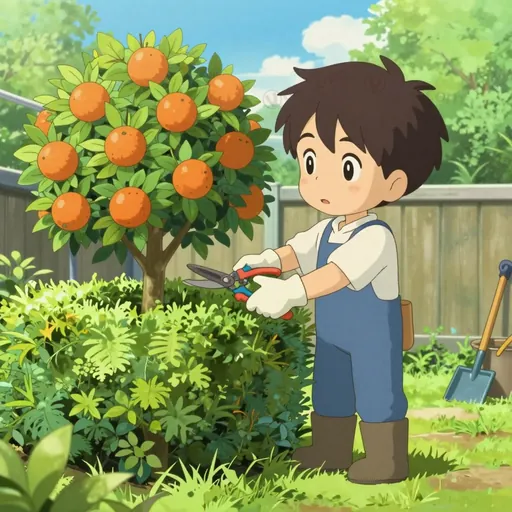
trifoliate orange
Definition
Noun: A small, fast-growing, spiny, deciduous tree (Citrus trifoliata or Poncirus trifoliata) native to China and Korea. It is characterized by its trifoliate leaves (leaves composed of three leaflets), fragrant white flowers, and small, decorative but inedible fruit. It is primarily used as a hardy rootstock for grafting other citrus trees and for forming dense, thorny hedges.
Usage Examples
- Noun:
- The trifoliate orange is valued more for its hardiness than for its fruit.
- We planted a hedge of trifoliate orange to create a natural barrier around the property.
- Many commercial citrus orchards use the trifoliate orange as a rootstock to improve disease resistance.
Advanced Usage
- In Horticulture: The term is often used in technical contexts related to botany, agriculture, and landscaping to specify this particular species due to its unique properties.
- The cold tolerance of the trifoliate orange makes it an excellent choice for citrus cultivation in marginal climates.
Variants and Related Words
- Hardy orange: A common alternative name for the trifoliate orange, emphasizing its cold resistance.
- Flying Dragon: A specific, contorted-stemmed cultivar ( 'Flying Dragon') often used ornamentally.
- Rootstock: The part of a grafted plant, which in this case is often the trifoliate orange, that provides the root system.
Synonyms
- Poncirus trifoliata: The botanical genus and species name.
- Citrus trifoliata: An alternative botanical name.
- Bitter orange (Note: This can be ambiguous as it also refers to , the Seville orange, which is a different, edible species).
Noun
-
small fast-growing spiny deciduous Chinese orange tree bearing sweetly scented flowers and decorative but inedible fruit: used as a stock in grafting and for hedges
Khám phá thêm
Các từ liên quan
Từ đồng nghĩa